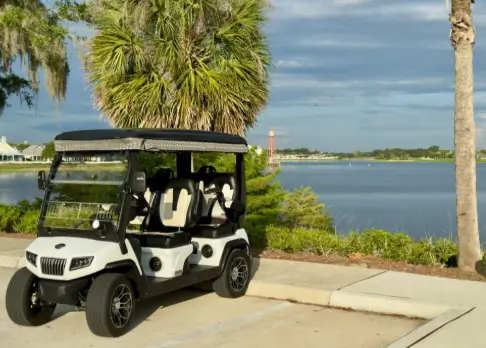
When they were first made, golf carts were just simple cars meant to help golfers get around the course. What was once considered a niche mode of transportation has evolved into a versatile, efficient, and increasingly popular solution for everyday mobility. Today, golf carts are no longer limited to fairways and greens. They have become a practical option for residential communities, commercial properties, and recreational spaces.
Early Beginnings on the Golf Course
The original purpose of golf carts was straightforward. They were created to help golfers move easily across large courses without fatigue. Early versions were basic, often powered by electricity or small gas engines, and focused primarily on functionality rather than comfort or design. These carts were seen as a convenience rather than a necessity, mainly used by those who needed assistance navigating the course.
Over time, their usefulness became more apparent. Golf course operators began to recognize the efficiency they brought, not just for players but also for maintenance and staff operations. This marked the first step in their transition from an optional accessory to an essential tool.
Advancements in Design and Technology
As demand grew, manufacturers started investing in better design and technology. Golf carts began to feature improved seating, smoother suspension systems, and more reliable power sources. Electric models gained popularity due to their quiet operation and lower environmental impact.
Modern carts now include advanced features such as digital displays, enhanced battery systems, and improved safety components. These innovations have made them more appealing to a broader audience. Smart technology has also made it easier for users to keep an eye on things like speed, battery life, and maintenance needs.
Brands like TXP Golf Carts have contributed to this transformation by offering models that combine durability with modern aesthetics and performance. Such advancements have helped redefine the perception of golf carts from simple utility vehicles to sophisticated mobility solutions.
Expanding Beyond the Fairway
One of the most significant changes in the evolution of golf carts is their expansion into everyday use. Gated communities, resorts, campuses, and industrial facilities now rely heavily on these vehicles for efficient transportation. Their compact size, ease of operation, and cost-effectiveness make them ideal for short-distance travel.
In residential areas, golf carts are often used for quick errands, neighborhood visits, or simply enjoying a leisurely ride. Many communities have even adapted their infrastructure to accommodate these vehicles, further supporting their widespread adoption.
Commercial applications have also grown significantly. Businesses use golf carts for transporting goods, moving staff across large properties, and enhancing customer experiences in hospitality settings. Their versatility has made them an essential part of operations in various industries.
Customization and Lifestyle Appeal
Another factor driving the popularity of golf carts is the ability to customize them. Owners can now personalize their carts with upgraded seats, unique paint finishes, lighting systems, and even entertainment features. This level of customization has turned golf carts into lifestyle products that reflect individual preferences.
There are also luxury models on the market, with high-end features like leather seats, high-tech sound systems, and stylish styles. These high-end options have elevated the status of golf carts, making them desirable beyond their functional value.
See also: Tabby Cat Weight Chart: Is Your Cat at a Healthy Weight?
A Sustainable Transportation Option
As environmental concerns continue to grow, golf carts have emerged as a sustainable alternative for short-range travel. Electric models produce zero emissions and consume significantly less energy compared to traditional vehicles. This makes them an attractive option for eco-conscious users.
Their low maintenance requirements and operational efficiency further enhance their appeal. Modern golf carts can go farther on a single charge thanks to improvements in battery technology. This makes them even more useful for everyday use.
The Road Ahead
The evolution of golf carts shows no signs of slowing down. With ongoing innovations in technology, design, and sustainability, these vehicles are set to play an even larger role in the future of transportation. Autonomous features, improved connectivity, and enhanced safety systems are likely to shape the next generation of golf carts.
From their origins on the golf course to their current role as everyday mobility solutions, golf carts have undergone a remarkable transformation. They now represent a perfect blend of convenience, efficiency, and modern design, proving that even the simplest ideas can evolve into something far more impactful.